
Impact · H1 2026
2026 impact report: frontline training results
What we measured from January to June 2026 in the accounts where Simón took part: performance, on-the-job application, skill mastery and income of the people who trained. With the method, the samples and how to read each figure.
First half of 2026
January to June
- improved their performance
- 93%
- applied what they learned
- 86.7%
- finished their courses
- 70%
- program NPS
- 78
The short answer
Training results for the first half of 2026
From January to June 2026, in the programs where Simón took part, the completion rate was 70%, against a benchmark average of 15% in the traditional format; people who took the lessons on the floor gave a CSAT of 4.67 and the program got an NPS of 78. According to the report, 93% of workers reported better job performance after completing the courses, and 86.7% put at least one skill into practice in the week after the course: 42.3% almost daily and 44.4% once or twice a week. The advanced mastery level went from 81% to 83%.
The H1 2026 impact report adds up what workers themselves answer in 1,318 start surveys and 1,276 closing surveys, with an average of 1,263 monthly active users. At a financial-services company that pays by commission, 82.6% of the April and May graduates activated their first commission, of $1,000 to $3,000 MXN, within their first 90 days.
These are trend signals from specific cohorts and moments, mostly self-reported. Below is how each figure was measured, the theory of change behind the measurement and its limits.
Impact
Our courses in numbers
These results come from data collected during H1 2026. On-the-job application comes from the impact report.
Completion rate
Observed in programs where Simón took part, against a 15% benchmark average for traditional formats.

Satisfaction reported by people who took the lessons on the floor.
Measured with floor users at the close of each program.

Put at least one skill into practice in the week after the course.
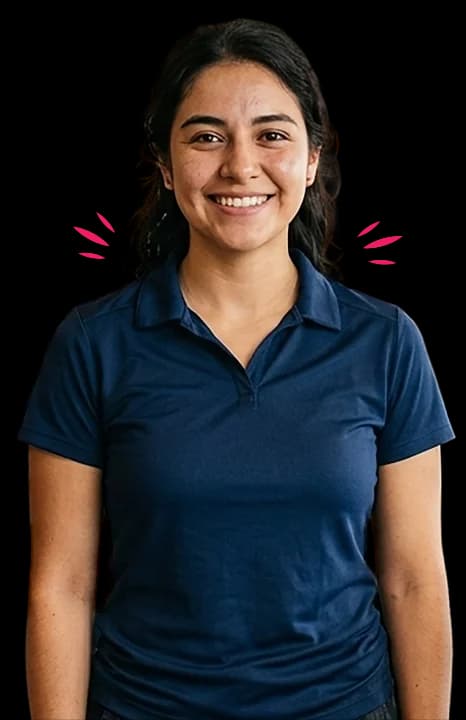
ANA
Sales associate · 6 months at MAJA
“It helps us give our sales more push, and that really helps with the commission”

“It helps us give our sales more push, and that really helps with the commission”
ANASales associate · 6 months at MAJA"I now have the information clear in my head. I know what I'm going to ask the customer, how to present it, how to close."
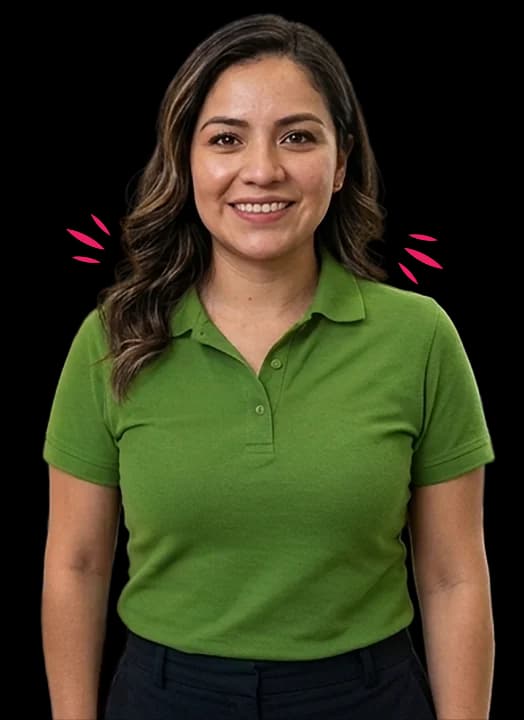 MARÍAInsurance sales · 40 days
"Now I have more customers, and thanks to that I can deliver to farther-away areas"
 ANGÉLICAEntrepreneur
Method
How each figure was measured
Period: January to June 2026. The completion rate, the CSAT and the NPS were observed in the programs where Simón took part; every other figure on this page comes from the H1 2026 impact report, which you can download in full in the section above.
The report is based on surveys applied at two moments, at the start and at the end of the course: 1,318 start surveys and 1,276 closing surveys. This half, the questions were redesigned to understand each person's growth expectations and economic reality from day one, and for the first time their pre-Simón income was captured systematically.
Average monthly active users for the half were 1,263 (54% men and 46% women), across food and beverage, financial services, technology, the public sector and retail. The typical user is a young adult, economically vulnerable and in their first three months on the job. The report defines an active user as someone who signed in to the platform and interacted with at least one video. These are the users included in each indicator:
- Productivity, 412 users: “Do you feel your job performance improved thanks to this training?”
- Skill application, 830 users: “In the last week, did you apply any skill from the course?”
- Retention signals, 107 users: “Is it clear to you how to grow?” and “Do you feel the company invests in you?”
- Earnings, 115 users at a financial services company, surveyed about their first commission roughly 90 days after joining.
- Skill mastery: the ability to carry out complex tasks or teach others, as each person perceives it.
Theory of change
Productivity, earnings and retention
Frontline workers face high turnover, variable income and training that rarely applies to their day-to-day work. That is why the report measures productivity, earnings and turnover: they are the three indicators that most directly decide whether someone manages to hold on to their job in the first months. They are connected, because learning to do the job well is what separates earning commissions sooner and staying from leaving the company.
Simón's theory of change states that, with personalized training on their phones, workers increase their productivity by more than 50% compared with people who don't use Simón, raise their earnings by more than 10% a year and stay longer at the company, with under 30% turnover among active users. This half, the report measures signals of each lever:
- Productivity: 93% report better job performance; 86.7% put at least one skill into practice in the week after the course, and the advanced mastery level went from 81% to 83%.
- Earnings: at the financial services company, 82.6% of the April and May 2026 cohort (115 valid responses) activated their first commission, of $1,000 to $3,000 MXN, within their first 90 days. Another 8.7% reached commissions of $3,000 to $4,500 MXN, 5.2% of $4,500 to $7,500 MXN, 0.9% of $7,500 to $10,000 MXN and 2.6% went over $10,000 MXN.
- Retention: with current data, the report sees a strong positive correlation between using Simón and staying in the job, and makes clear it is still building the path to establish causality.
Shifting goals
What they want to achieve in 3 months, before and after the course
According to the report, the most revealing finding of the half: goals move from immediate economic urgency to building a sustainable career path.
| 3-month goal | Before the course | After the course |
|---|---|---|
| Keep my job | 7.1% | 10.6% |
| Get a promotion | 14.2% | 23.3% |
| Earn more money | 38.9% | 15.6% |
| Learn new skills | 39.8% | 50.6% |
Keep my job
- Before the course
- 7.1%
- After the course
- 10.6%
Get a promotion
- Before the course
- 14.2%
- After the course
- 23.3%
Earn more money
- Before the course
- 38.9%
- After the course
- 15.6%
Learn new skills
- Before the course
- 39.8%
- After the course
- 50.6%
Source: H1 2026 impact report (January to June 2026), start and closing surveys. Self-reported answers.
Limits
How to read these figures
The report states its own limits. Keep them in mind before quoting or comparing these results:
- They are local snapshots: they come from specific moments and cohorts and read as trend signals, not as the behavior of the whole user base.
- They are self-reported: performance, application and skill mastery come from what each person answers. The challenge is to cross-check them with real, external performance metrics.
- They carry an enthusiasm bias: the people who finish the courses and answer are the most engaged, so post-course metrics naturally lean toward an optimistic scenario.
- Earnings come from a single account: a financial services company with variable, commission-based pay.
- They show correlation, not causality: low activity among people who leave the company may mean Simón did not retain them, or that they were already disconnected from any internal initiative.
- The figures come from the accounts and cohorts that took part in the first half of 2026, not from the whole industry.
- The completion rate, the CSAT and the NPS are not part of the report's surveys: they were observed in the programs where Simón took part. Completion is compared against a 15% benchmark average for traditional formats.
Questions about the results
What is the completion rate of courses with Simón?
70% in the programs where Simón took part between January and June 2026, against a benchmark average of 15% in the traditional format.
How many workers apply what they learn with Simón?
In the first half of 2026, 86.7% put at least one skill into practice in the week after the course: 42.3% almost daily and 44.4% once or twice a week, according to 830 surveyed users. It is self-reported.
How is the impact of training measured?
With surveys at two moments, at the start and at the close of the course, on four levers: productivity, skill application, retention signals and earnings. In the first half of 2026, 1,318 start surveys and 1,276 closing surveys were analyzed; each indicator has its own sample, detailed in the method.
Are the results self-reported?
The report's are: performance, application and skill mastery come from what each person answers, and the people who finish and answer tend to be the most engaged. That is why the report presents them as trend signals and aims to measure skills with platform data.
Does training raise frontline workers' earnings?
In the case measured, a financial services company with commission-based pay, 82.6% of the April and May 2026 graduates activated their first commission, of $1,000 to $3,000 MXN, within their first 90 days, and 2.6% went over $10,000 MXN. It is a single account, so it does not describe the whole user base.
Where can I download the full impact report?
On this page, in the figures section: the Download our impact report button gets you the PDF (5 MB).
Keep exploring
Go deeper
Pricing
From $250 USD a month, by how many people you train and how many courses you create with AI.
Reports by branch
Who finished, who understood and what to reinforce, by area and person.
Financial services
Training for branch teams and commission-based sales.
Guide: training frontline staff
How to train without pulling your people off their shift, step by step.
Simón vs LMS and Moodle
How Simón works alongside your LMS and what it adds on the floor.




Measure the impact in your own operation
Book 30 minutes and we will show you how Simón turns your material into a ready-to-publish course and what you will be able to see by area and branch.
No card · Cancel anytime
Multi-country operation, bulk user onboarding or HR integration? We support you site by site.